
Color Blind Test
Take our free color blind test online and check your color vision in minutes. Accurate results for red-green, blue-yellow, and all types of color blindness.
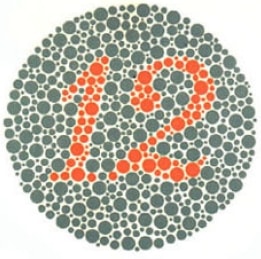
Ishihara Color Blind Test
This test uses Ishihara plates to screen for red-green color blindness. You'll be shown colored dot patterns with hidden numbers.
- •Look at each image and identify the number you see
- •Type the number and press Enter or click Submit
- •If you can't see a number, click Skip
More Color Blind Tests
Red-Green Color Blind Test
Detect Protanopia and Deuteranopia with this specialized red-green screening test.
Blue-Yellow Color Blind Test
Screen for Tritanopia and Tritanomaly with our blue-yellow color vision assessment.
Full Ishihara Test
Take the complete 38-plate Ishihara test for a comprehensive color vision evaluation.
Kids Color Blind Test
Child-friendly shapes and symbols designed for children who can't yet read numbers.
FM100 Hue Test
Arrange color caps in order to measure the type and severity of your color vision deficiency.
Cambridge Color Test
A research-grade computerized test using Landolt C targets for precise CVD diagnosis.
Lantern Test
Identify colored lights to simulate the military FALANT used at MEPS screening.
D-15 Color Blind Test
Arrange 15 color caps to classify your color deficiency axis and severity level.
Color Blindness Simulator
Upload any image to see how it looks through the eyes of someone with color blindness.
Color Blindness by the Numbers
Over 300 million people worldwide live with color vision deficiency
Color Blind Test Simulator
See how colors appear to people with different types of color blindness
This is how people with normal color vision see the world.
Understanding Color Blindness
Color blindness, clinically known as color vision deficiency (CVD), affects how your eyes perceive different wavelengths of light. Rather than seeing no color at all, most people with CVD experience a reduced ability to distinguish between certain color combinations.
Your eyes contain specialized cells called cones, which detect red, green, and blue light. When one or more cone types function differently, colors can appear muted, similar to each other, or entirely different from how others see them.
How Color Vision Works
When any of these cone types are missing or abnormal, it results in different types of color blindness.
Types of Color Blindness
Each type affects how specific colors are perceived. The color bars show which colors get confused.
Protanopia
Complete absence of red cones. Reds appear dark and muddy, often confused with black. Red traffic lights may appear dim.
Deuteranopia
Most common form. Missing green cones cause greens, yellows, and reds to look similar. Ripe and unripe fruits look identical.
Tritanopia
Rare blue-yellow blindness. Blues appear greenish, yellows look pink. Often acquired from disease rather than inherited.
Protanomaly
Weakened red perception. Reds, oranges, and yellows appear shifted toward green. Less severe than Protanopia.
Deuteranomaly
Most prevalent form overall. Reduced green sensitivity. Many don't realize they have it since shifts are subtle.
Tritanomaly
S-cones present but spectrally shifted. Inherited autosomally, so it affects men and women equally — and is more often acquired than congenital.
Achromatopsia
Complete color blindness—seeing only shades of gray. Extremely rare. Often includes light sensitivity and reduced vision.
What Causes Color Blindness?
Color vision deficiency can be inherited or acquired through various factors
Genetic Inheritance
Most color blindness is inherited through the X chromosome. Men (XY) need only one copy of the gene, while women (XX) need two copies to be affected.
Age-Related Changes
Color perception naturally diminishes with age as lens transparency decreases and cone cells degrade. By age 60, many notice subtle shifts in blues and yellows.
Gradual progression over time
Medical Conditions
Certain diseases can cause acquired color blindness, including diabetic retinopathy, glaucoma, macular degeneration, and multiple sclerosis.
Medications & Chemicals
Some medications list color vision changes as side effects. Industrial chemical exposure can also affect color perception.
How This Color Blind Test Works
Our test uses the Ishihara method, developed by Dr. Shinobu Ishihara in 1917 and still considered the gold standard for screening red-green color blindness.
View the Plate
Look at the colored dot pattern displayed on screen
Identify the Number
Type what you see—don't overthink, trust your first impression
Get Your Results
Receive instant feedback on your color vision after 8 plates
For Best Results
- Use a well-lit room with natural or white light
- Set comfortable screen brightness—not too dim or bright
- Disable blue light filters or night mode temporarily
- View at arm's length (2-3 feet away)
- Keep your glasses or contacts on if you normally wear them
Understanding Your Score
Living with Color Blindness
Color blindness doesn't have to limit your daily life. Many successful professionals thrive with CVD.
Daily Life
- Label clothes with color names
- Learn traffic light positions
- Use color identification apps
- Organize by outfit instead of color
Technology Aids
- EnChroma or Pilestone glasses
- iOS/Android color filters
- Browser accessibility extensions
- High-contrast display modes
At Work
- Request accessible color schemes
- Use patterns alongside colors
- Advocate for inclusive design
- Use color-labeling tools
Latest Articles
Expert guides on color blindness types, genetics, testing, and daily life
Color Blindness Statistics: How Many People Are Colorblind?
About 300 million people worldwide — 8% of men, 0.5% of women. Prevalence by type, ethnicity, and country, every figure sourced.
Read more11 Color Blindness Myths vs Facts (Debunked with Evidence)
Do colorblind people see in black and white? Can glasses cure it? Eleven persistent myths paired with the evidence-backed fact.
Read moreFamous People with Color Blindness: 7 Verified Cases
From John Dalton to Christopher Nolan and Mark Zuckerberg — documented cases with real sources, plus the myths debunked.
Read moreCan Color Blindness Be Cured? How Is It Treated? (2026 Answer)
Inherited color blindness can't be cured yet, but acquired cases are sometimes reversible. An honest guide to treatment, gene therapy, and color-blind glasses.
Read moreColor Blindness FAQ: 50+ Questions Answered by Experts
Everything you need to know about color blindness — types, causes, genetics, testing, treatments, daily life, careers, and more.
Read moreMilitary Color Blind Requirements by Branch
MEPS testing process, jobs by branch, waiver options, and international rules for all U.S. branches.
Read moreColor Blind Test — Frequently Asked Questions
Ready to Take the Color Blind Test?
Our free online color blind test takes just 2-3 minutes and gives you instant results. Scroll up to start!