
Ishihara Color Blind Test
The Ishihara test is the most widely used screening test for red-green color deficiency. Identify numbers hidden within colored dot patterns.
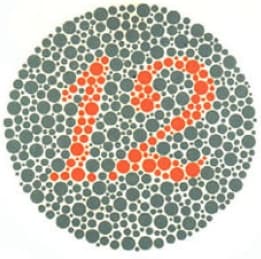
Ishihara Color Blind Test
This test uses Ishihara plates to screen for red-green color blindness. You'll be shown colored dot patterns with hidden numbers.
- •Look at each image and identify the number you see
- •Type the number and press Enter or click Submit
- •If you can't see a number, click Skip
What is the Ishihara Test?
The Ishihara test was designed by Dr. Shinobu Ishihara in 1917 and remains the gold standard for color blindness screening. It consists of circular plates containing colored dots arranged to form numbers or patterns.
People with normal color vision can see the numbers clearly, while those with red-green color deficiency may see different numbers or no numbers at all. The test is particularly effective at detecting:
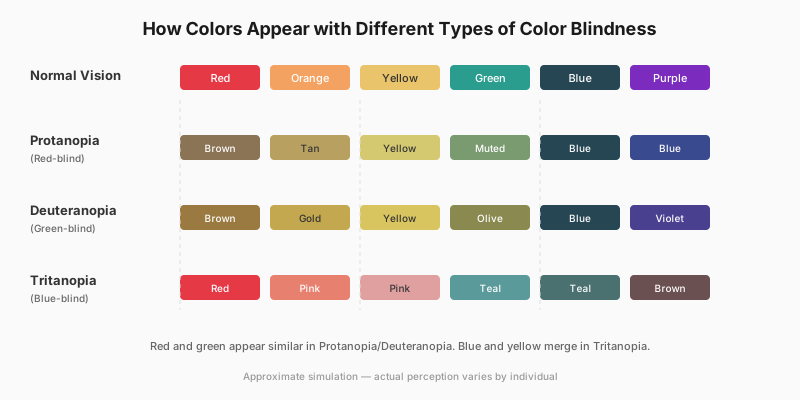
- Protanopia - Red blindness
- Protanomaly - Red weakness
- Deuteranopia - Green blindness
- Deuteranomaly - Green weakness
How to Take the Test
1. Start the Test
Click the "Start Test" button above. Choose between the 14-plate quick test or the full 38-plate version.
2. Identify Numbers
Look at each plate and enter the number you see. If you cannot see a number, click "I can't see".
3. Get Results
After completing all plates, receive your result indicating color vision status and type of deficiency, if any.
Types of Ishihara Plates
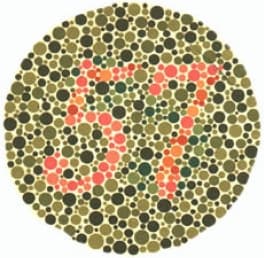
Demonstration Plates
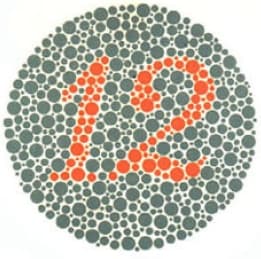
The first plate is visible to everyone, regardless of color vision. It serves as a practice plate to introduce you to the test format and does not count toward your score.
Transformation Plates
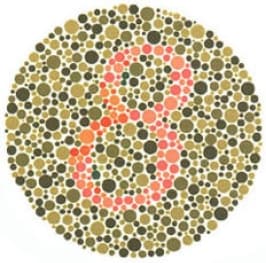
These plates show different numbers to people with normal vision versus those with color deficiency. A person with red-green deficiency will read a different number than someone with normal vision.
Vanishing Plates
The numbers on these plates are only visible to people with normal color vision. If you have a color vision deficiency, the number will be invisible or very difficult to see.
Hidden Digit Plates
These special plates contain numbers that are only visible to people with color vision deficiency. Those with normal vision cannot detect the hidden figures.
Diagnostic Plates
These plates help determine the specific type and severity of color blindness, distinguishing between Protanopia (red-blind) and Deuteranopia (green-blind).
Sources
- National Eye Institute (NEI) — Overview of color blindness types, causes, and diagnosis
- American Academy of Ophthalmology (AAO) — Clinical information on color vision deficiency and testing methods
- National Health Service (NHS) — Symptoms, causes, and management of colour vision deficiency
- Shinobu Ishihara — Wikipedia — History of the Ishihara test and its creator
- MedlinePlus (U.S. National Library of Medicine) — Medical guide on color blindness diagnosis and treatment
Frequently Asked Questions
Related Tests
Red-Green Color Blind Test
Specialized test for Protanopia and Deuteranopia detection.
Blue-Yellow Color Blind Test
Screen for Tritanopia and Tritanomaly.
FM100 Hue Test
Test your color discrimination ability with hue arrangement.
Kids Color Blind Test
Fun, child-friendly color vision test with hidden animals.
Lantern Test (FALANT)
Farnsworth Lantern test used by the military, FAA, and maritime services.
Cambridge Color Test
Computerized test using Landolt C rings to screen for all types of color blindness.
Farnsworth D-15 Test
Arrange 15 colored caps to screen for protan, deutan, and tritan color vision deficiency.
Color Blindness Simulator
Upload any image to see how it looks through the eyes of someone with color blindness.