
Red-Green Color Blind Test
Detect Protanopia (red blindness) and Deuteranopia (green blindness) with our specialized red-green color vision test.
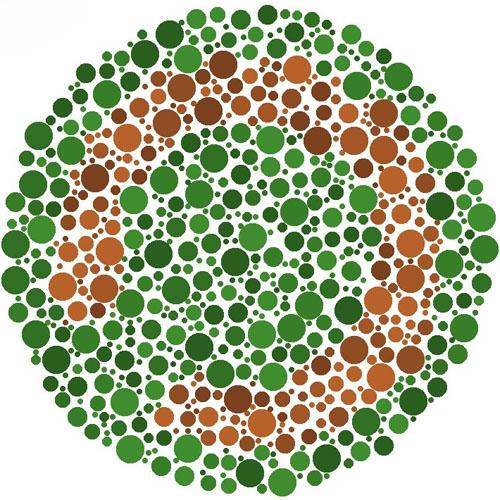
Red-Green Color Blind Test
This test uses C-shaped Landolt rings to screen for red-green color blindness. Find the gap in the colored ring and click directly on it.
- •Look at the colored circle and find the gap (opening)
- •Click directly on the gap in the ring
- •If you cannot see the gap, click "I Can't See"
Understanding Red-Green Color Blindness
Red-green color vision deficiency is the most prevalent form of color blindness, representing roughly 95% of all inherited cases. It occurs when the cone cells responsible for perceiving red or green wavelengths of light are either absent or function abnormally.
Globally, about 8% of males and 0.5% of females experience some degree of red-green deficiency. The condition is inherited through the X chromosome, which explains the significant gender disparity — males carry only one X chromosome, so a single affected gene results in color blindness.
Protan Deficiency
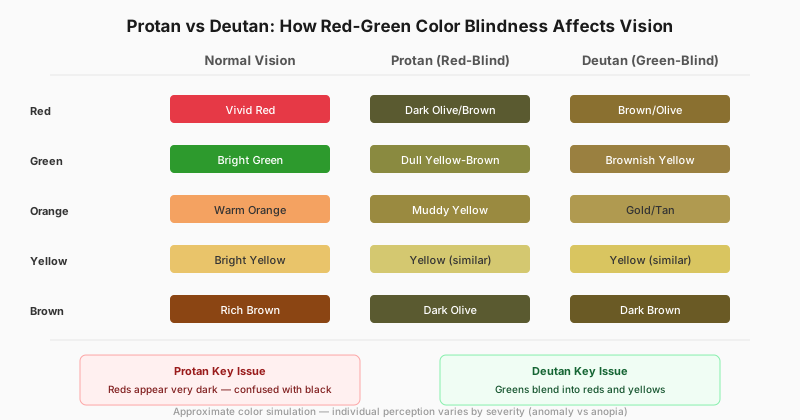
Caused by reduced sensitivity or absence of long-wavelength (L) cones. Protanopia means complete absence of red cones, while Protanomaly means reduced red sensitivity. Reds appear darker and may be confused with black, brown, or dark green.
Deutan Deficiency
Caused by reduced sensitivity or absence of medium-wavelength (M) cones. Deuteranopia means complete absence of green cones, while Deuteranomaly means reduced green sensitivity. Greens tend to blend with reds, yellows, and browns.
Prevalence Breakdown (Males)
How to Take the Test
1. Start the Test
Click "Start Test" above. You'll see a colored circle (Landolt C ring) with a gap on one side.
2. Find the Gap
Look at the ring carefully and click directly on the gap opening. If you cannot distinguish the ring from the background, click "I can't see the gap".
3. Get Your Results
After 14 rounds, you'll receive a detailed result indicating the severity of any red-green color vision deficiency detected.
How This Test Works
This test uses Landolt C rings — circles with a gap in one of eight directions. The ring is drawn in a color that people with red-green deficiency find difficult to distinguish from the surrounding background color. If you can see the ring clearly, you can locate and click on the gap; if you cannot distinguish it, the ring blends into the background.
The colors used for the ring and background are chosen along "confusion lines" in the CIE color space — pairs of colors that appear identical to people with a specific type of deficiency but are clearly different to those with normal vision. By varying these color pairs across 14 rounds, the test measures how well you can separate red-green hues.
The Landolt C Method
The Landolt C is a standard optotype used worldwide for visual acuity and color vision testing. Its simple shape — a ring with a single gap — provides a direction-based response that is language-independent and unambiguous. You simply click where you see the opening, making it accessible to users of any age or language background.
Why Gap Direction Matters
Unlike number-based tests where guessing is easy, the gap can appear in any of eight directions (up, down, left, right, and four diagonals). This makes random guessing unreliable (only 12.5% chance of a correct guess) and provides a more precise measurement of your ability to distinguish the ring from the background.
Scoring and Severity
Your score is based on how many of the 14 rounds you correctly identify the gap direction. Normal color vision typically achieves 90% or above. Scores between 70–89% suggest mild deficiency, 50–69% moderate deficiency, and below 50% indicates a strong red-green color vision deficiency.
Sources
- National Eye Institute (NEI) — Comprehensive guide on color blindness types and genetic causes
- American Academy of Ophthalmology (AAO) — Clinical information on red-green color vision deficiency
- National Health Service (NHS) — Symptoms, causes, and management of colour vision deficiency
- MedlinePlus Genetics — Genetic basis of red-green color blindness and X-linked inheritance
- Colour Blind Awareness — Prevalence statistics and types of color vision deficiency
Frequently Asked Questions
Related Tests
Ishihara Test
Classic color blind test with 14 or 38 Ishihara plates.
Blue-Yellow Color Blind Test
Screen for Tritanopia and Tritanomaly.
FM100 Hue Test
Test your color discrimination ability with hue arrangement.
Kids Color Blind Test
Fun, child-friendly color vision test with hidden animals.
Lantern Test (FALANT)
Farnsworth Lantern test used by the military, FAA, and maritime services.
Cambridge Color Test
Computerized test using Landolt C rings to screen for all types of color blindness.
Farnsworth D-15 Test
Arrange 15 colored caps to screen for protan, deutan, and tritan color vision deficiency.
Color Blindness Simulator
Upload any image to see how it looks through the eyes of someone with color blindness.