
Test de daltonismo para niños
Una forma divertida y adaptada a los niños de detectar la deficiencia de la visión del color. Los niños identifican animales ocultos en patrones de puntos de colores, sin necesidad de leer.
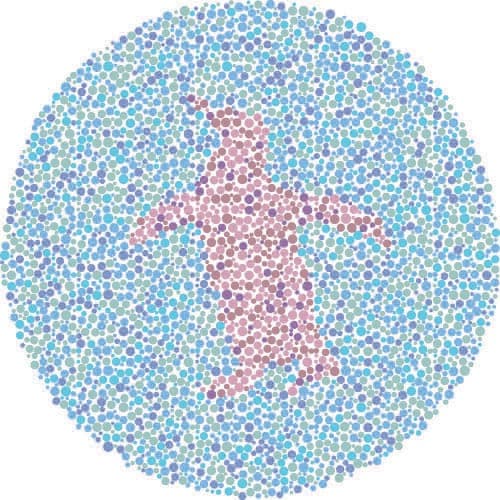
Test de daltonismo para niños
¡Un test de visión del color divertido y adaptado a los niños! Encuentra los animales ocultos en los patrones de puntos de colores.
- •Mira el círculo de colores y encuentra el animal oculto
- •Haz clic en el animal que ves entre las opciones de abajo
- •Si no ves ningún animal, haz clic en "No lo veo"
Consejos para padres
La deficiencia de la visión del color afecta aproximadamente al 8 % de los niños y al 0,5 % de las niñas. El cribado temprano ayuda a asegurar que tu hijo reciba el apoyo adecuado en la escuela, especialmente en actividades con materiales codificados por color, mapas o arte.
Antes de empezar
Ajusta el brillo de tu pantalla a al menos el 75 % y desactiva cualquier filtro de color (modo nocturno, filtro de luz azul). Busca un lugar cómodo y bien iluminado donde tu hijo pueda sentarse sin distracciones durante unos minutos.
Durante el test
Plantéalo como un juego: "¿Puedes encontrar el animal escondido?". Deja que tu hijo señale o nombre el animal sin ayuda. Evita dar pistas sobre cuál podría ser la respuesta correcta. Si duda, anímalo a elegir "No lo veo" en lugar de adivinar.
Después de los resultados
Si tu hijo obtiene una puntuación inferior al 80 %, no te preocupes: esto es una herramienta de cribado, no un diagnóstico. Factores como la calidad de la pantalla o el estado de ánimo del niño pueden afectar a los resultados. Programa una visita con un optometrista para confirmarlo y, si es necesario, hablar sobre las adaptaciones escolares.
Cómo funciona el test
1. Encuentra el animal
Cada lámina muestra puntos de colores con la forma de un animal oculta. Los niños con visión del color normal pueden distinguirlo con facilidad.
2. Toca la coincidencia
Elige el animal que coincide entre las opciones bajo la lámina. Si no se ve ningún animal, toca "No veo ningún animal".
3. Mira la puntuación
Tras 10 láminas, los resultados muestran cuántos animales se identificaron correctamente y si se recomienda una evaluación adicional.
Señales de que tu hijo puede ser daltónico
Muchos niños aprenden a nombrar los colores de memoria sin percibirlos realmente igual que los demás. Un niño puede llamar "rojo" a un camión de bomberos simplemente porque le han dicho que lo es, no porque vea el mismo rojo que tú. Estos son algunos comportamientos que pueden indicar un problema con la visión del color:
Dibujar y colorear
Usar colores inesperados: hojas moradas en los árboles, piel verde en las personas o cielo marrón. Resistencia a colorear fichas o frustración al elegir los lápices de colores.
Identificación de colores
Confundir los lápices rojo/verde, rosa/gris o morado/azul. Dificultad para ordenar bloques o cuentas de colores cuando los tonos son similares.
Sensibilidad a la iluminación
Los colores se vuelven más difíciles de distinguir con poca luz o en zonas pequeñas de color, pero notablemente más fáciles con luz natural intensa.
Evitación o negación
Resistencia a jugar a juegos de emparejar colores, o insistir en que ve los colores correctamente cuando los resultados sugieren lo contrario.
El historial familiar importa: si algún varón por parte de la madre (tíos, abuelos, primos) es daltónico, la probabilidad es mayor. A los 5 años, los niños con visión normal deberían identificar grupos de colores con seguridad en segundos.
What to watch for at home, before any test
Colour vision deficiency is rarely announced. Children have no reference point for what everyone else sees, so they don't report a problem — they simply learn workarounds, and a parent notices the workaround long before the cause. These are the everyday moments worth paying attention to.
Colouring in the “wrong” colours
Brown or purple leaves, green skin tones, a grey sun. Occasional creative choices mean nothing — what matters is a consistent substitution, especially when your child insists the colour is right. Watch too for a child who reaches for a crayon, hesitates, then checks the label on the wrapper.
Confusion about traffic lights
Many colour blind children learn the top-middle-bottom positions and never mention colour at all. If your child describes a light by where it is rather than what colour it is, or gets red and green the wrong way round when the lights are far away, it is worth following up.
Trouble with certain chalk or whiteboard colours
Complaints that they “can't see” what the teacher wrote — but only sometimes. Red and orange marker on a whiteboard, or coloured chalk on a green board, are common culprits. The intermittent nature is the clue: it tracks the colour used, not the day or the seat.
Unexpected results in colour-matching games
Sorting beads, matching socks, colour-based board games or app puzzles taking noticeably longer than peers, or triggering frustration and avoidance. Children often opt out of games they reliably lose rather than say why.
Saying two colours look “the same”
The most direct signal, and the easiest to dismiss. Red and brown, green and brown, pink and grey, blue and purple are the classic pairs. If a child repeatedly groups the same two colours together, take the statement at face value rather than correcting it.
What age should a child be tested?
From about age 4, most children can reliably match shapes and follow a simple picture task, which is what this test asks for — no reading or number recognition needed. Before 4, formal screening tends to measure attention span rather than colour vision; observing colouring and colour naming is more informative at that stage. If there is colour blindness on the mother's side of the family, screening at 4 or 5 is worth doing even with no symptoms, because the condition is far more likely and the workarounds children invent are very good at hiding it.
Inheritance runs through the mother. A boy whose maternal grandfather or uncle is colour blind has a meaningfully raised chance, which is why family history is worth asking about before you interpret any result.
Early signs in children
A longer guide to spotting colour vision deficiency before school, and what to do at each age.
Protanopia (red-weak)
The red-cone type. Reds look dark and muted, and red-brown and red-black pairs are hardest.
Deuteranopia (green-weak)
The green-cone type and the most common of all. Greens, browns and oranges run together.
Working with school, and what to ask for
Colour vision deficiency has no effect on intelligence, reading ability, or academic potential. What it does affect is access to information that a classroom has encoded in colour alone. Almost every difficulty disappears once that information is available another way — and those adjustments cost a teacher nothing.
How to raise it with the teacher
Tell the class teacher directly and early, ideally in writing so it follows your child through the year and into the next one's handover notes. Keep it short and practical: which colours are hard, what has helped at home, and one or two concrete requests. Frame it as an access adjustment rather than a medical disclosure — most teachers have never been told a pupil is colour blind and will simply not have considered it. Ask that it be noted in your child's record, and check that art, science and PE staff know as well, since those are the lessons where colour coding is heaviest.
Reasonable adjustments to request
- Never colour alone on the board. Ask that anything distinguished by colour also be distinguished by a label, an underline, a shape or a position. Black or dark blue marker on white is the most legible default.
- Label colours on printed worksheets. On maps, graphs and diagrams, a written colour name or a pattern fill turns an inaccessible sheet into an ordinary one. This costs nothing at the point of printing.
- Rethink colour-coded organisation. Red/green marking, colour-coded reading levels, and coloured tray or folder systems all need a second cue — a number, a letter, or a symbol.
- Distinguish PE teams by more than bib colour. Red versus green bibs on a grass pitch is the single hardest combination that exists for a red-green deficient child. Bibs versus no bibs, or two clearly different tones, solve it.
- Watch science practicals. Litmus paper, indicator solutions, flame tests and dissection diagrams are all colour-dependent. A lab partner or a written description keeps the task fair without lowering it.
- Check digital materials too. Colour-coded spreadsheets, quiz apps and interactive whiteboards carry the same problem, and are often overlooked because the paper materials were already fixed.
What this does not mean
It is worth saying plainly, because it is the thing parents worry about most: colour vision deficiency is not a learning disability, does not require special educational provision, and does not limit what your child can study or achieve. The overwhelming majority of colour blind adults describe it as a mild inconvenience. A small number of careers with statutory colour vision standards — commercial piloting, some military and rail roles — do have restrictions, but that is a conversation for adolescence, not primary school. What matters now is simply that your child is not quietly disadvantaged by a worksheet nobody thought to label.
Fuentes
- National Eye Institute (NEI) — Color blindness overview including prevalence in children
- American Academy of Ophthalmology (AAO) — Early detection and screening recommendations for children
- National Health Service (NHS) — Guidance on colour vision deficiency in children and school support
- Colour Blind Awareness — Education — How color blindness affects children in school and recommended accommodations
- MedlinePlus Genetics — Genetic inheritance patterns of color vision deficiency